



The South African nation is united in grief following the death of Mohammed Mokoena, the 16-year-old boy from Zamdela, Sasolburg, whose brave fight against a rare and debilitating medical condition touched hearts across the country and became a symbol of resilience, community solidarity, and the power of collective compassion.
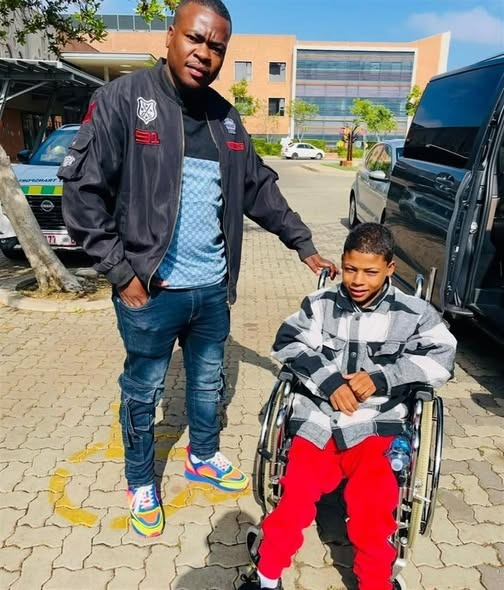
Mohammed, also known by his real name Ahmed Mgweqo, passed away on Monday, February 2, 2026, at a hospital after being admitted on Saturday with complaints of severe chest pains. The news was confirmed by his longtime mentor and community activist Desmond Ramaru, who announced the devastating loss on social media, marking the end of a journey that had captivated millions of South Africans.
ALSO READ: World’s Youngest Mother: 9-Year-Old Girl Gives Birth in Bulawayo Hospital, Zimbabwe
A Battle That Inspired a Nation
Mohammed lived with a complex and rare medical condition that caused severe enlargement of his kidneys and significant structural deformities affecting his legs and feet. Diagnosed at age 13, the condition severely limited his ability to walk long distances, run, or stand for extended periods, imposing physical challenges that would test even the strongest adult.
Despite the constant pain and medical complications, those who followed Mohammed’s journey consistently described a young man characterized by an infectious spirit, humor, and unwavering positivity. On social media, where he was affectionately known as “Young Mokoena” or “Mosotho,” Mohammed documented his daily struggles through videos that showcased not his suffering, but his determination to live life fully despite extraordinary circumstances.
His content resonated deeply with South Africans across demographic and geographic boundaries. What began as personal documentation of his medical journey evolved into a nationwide movement that demonstrated the remarkable capacity for unity and compassion within South African society.
The Loss That Preceded the Illness
Mohammed’s medical battle was compounded by profound personal tragedy when his mother passed away in April 2025. The loss left Mohammed and his three siblings — with the eldest only 24 years old — orphaned and relying on government housing in Zamdela and social grants for survival.
It was during this period of compounded hardship that Desmond Ramaru, a community activist from Limpopo, stepped forward to become Mohammed’s primary caregiver and advocate. Ramaru described the relationship as fraternal, regularly driving from Limpopo to Free State to check on Mohammed’s wellbeing and ensure he received necessary medical attention.
Ramaru highlighted the multiple challenges the family faced, including affording Mohammed’s specialized diet, transportation costs for frequent hospital visits, and unsuitable living conditions such as having to navigate stairs despite Mohammed’s mobility limitations.
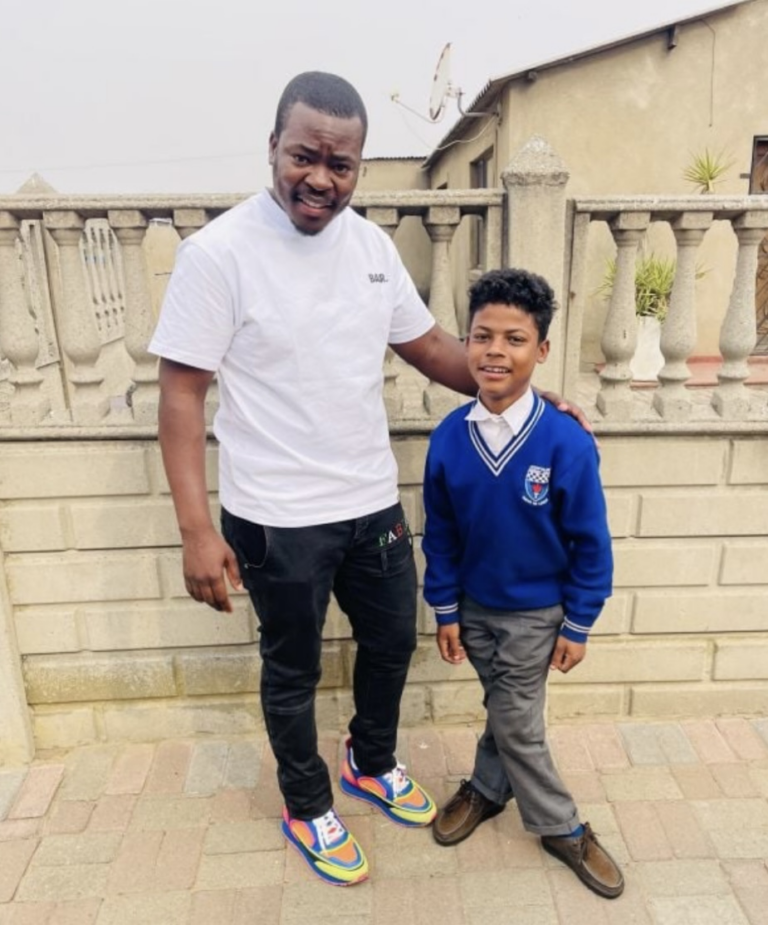
A Nation United Through BackaBuddy Campaign
In September 2025, Ramaru launched a BackaBuddy crowdfunding campaign titled “Help Young Mokoena Get Surgery” to raise funds for the specialized medical procedures Mohammed desperately needed. The campaign aimed to consult private specialists, determine surgical costs, and gather resources for Mohammed’s ongoing day-to-day medical expenses.
The response from South Africans was immediate, overwhelming, and deeply moving. The BackaBuddy campaign raised R44,000 to assist with medical bills, with contributions pouring in from ordinary citizens making small donations alongside larger contributions from businesses and organizations. Mohammed’s name trended across social media platforms, prayer circles formed in communities nationwide, and his story became a unifying force that transcended South Africa’s often-divisive social landscape.
The campaign represented more than fundraising — it became a referendum on South African society’s capacity for collective empathy. Strangers who had never met Mohammed felt personally invested in his recovery, sharing updates, organizing local fundraising events, and maintaining constant prayer vigils.
The Surgery and Brief Hope
In November 2025, Mohammed underwent surgery at Chris Hani Baragwanath Academic Hospital in Johannesburg, one of the country’s leading facilities for complex pediatric cases. The procedure was initially reported as successful, with doctors managing to alleviate pressure from his enlarged kidneys and performing reconstructive work on his feet.
The surgical intervention involved careful removal of excess tissue, drainage of cysts where present, and orthopedic adjustments designed to improve Mohammed’s mobility and quality of life. Post-surgery, Mohammed spent time recovering in the hospital ward with ongoing monitoring to prevent infections or complications.
By December 2025, Mohammed was discharged in time for the festive season, allowing him to spend precious moments at home with his siblings. For supporters who had followed every update, the successful surgery and discharge represented a turning point — evidence that their collective efforts had translated into tangible medical progress and renewed hope for a young life that had endured disproportionate suffering.
Social media erupted with celebratory messages, gratitude toward medical professionals, and renewed optimism about Mohammed’s future. Many believed the worst had finally passed after years of unrelenting medical crises.
The Devastating Turn and Final Days
That optimism was shattered in early February 2026. Mohammed was admitted to hospital after complaining of severe chest pains. On Monday, February 2, 2026, he passed away while under medical care, succumbing to complications related to his underlying condition.
Ramaru shared the heartbreaking news in an emotional Facebook post, writing: “You broke my heart, boy. I didn’t have the courage to do this. Yesterday I received a call that felt like a joke, but it was true. All I ever wanted was for you to live like other kids, not to leave us in the middle of the process”.
The announcement sent shockwaves through the online communities that had rallied around Mohammed’s story. Social media platforms were immediately flooded with tributes, expressions of disbelief, and profound grief from supporters who had invested emotionally in his recovery journey.
A Nation Processing Collective Grief
The response to Mohammed’s death reveals the depth of connection South Africans felt toward a young man many had never met in person. Tributes poured in from across the demographic spectrum — from community activists and influencers who had amplified his campaign to ordinary citizens who had donated small amounts and followed his progress faithfully.
Social media became a space for collective mourning, with users sharing photos, videos, personal reflections, and memories of how Mohammed’s courage had influenced their perspectives on compassion, resilience, and community responsibility. The hashtags #RIPMokoena and #YoungMokoena trended nationally as South Africans processed their grief publicly.
Many supporters expressed that Mohammed’s death felt intensely personal despite the physical distance. Comments reflected feelings of helplessness and frustration — how could a child who had received such massive public support, who had undergone successful surgery, who had survived so much, still be lost?
Questions About Healthcare Access and Systemic Failures
Mohammed’s death has reignited uncomfortable but necessary conversations about healthcare inequality, access to specialized medical care, and the heavy burden placed on public goodwill when institutional systems fail the most vulnerable populations.
Ramaru revealed that Mohammed’s family consists of five siblings with no working family members, no parents, and no insurance policies, leaving them entirely dependent on social grants and community support. This reality underscores the precarious position of families dealing with rare, expensive medical conditions within South Africa’s two-tiered healthcare system.
Critics have questioned why a child requiring ongoing specialized care had to rely on crowdfunding rather than comprehensive state support. While the BackaBuddy campaign successfully funded Mohammed’s surgery, questions remain about post-operative care, ongoing monitoring, and the medical resources available to children from economically disadvantaged backgrounds facing complex health challenges.
Some supporters have called for transparency regarding the final stages of Mohammed’s treatment — what complications arose, what interventions were attempted, and whether additional resources could have altered the outcome. These questions reflect growing public sensitivity around medical crowdfunding and accountability in cases where substantial public funds are raised for individual health emergencies.
The Broader Implications of Mohammed’s Story
Beyond the immediate tragedy, Mohammed Mokoena’s life and death expose structural challenges within South Africa’s healthcare system and social safety net. His story illustrates the gaps that exist between successful surgical intervention and comprehensive, long-term medical management of complex conditions.
Rare diseases often require ongoing specialist care, regular monitoring, immediate response to complications, and resources that extend far beyond single surgical procedures. For families without financial means or comprehensive medical insurance, navigating this continuum of care becomes nearly impossible without sustained community support.
Mohammed’s story also highlights the double-edged nature of social media-driven medical fundraising. While platforms like BackaBuddy enable rapid mobilization of resources and demonstrate remarkable community solidarity, they also reveal systemic failures — why should individual survival depend on viral social media campaigns and the goodwill of strangers rather than guaranteed institutional support?
A Legacy of Compassion and Unity
Despite the devastating outcome, Mohammed’s impact on South African society extends beyond his medical struggle. His story demonstrated that beneath South Africa’s well-documented social divisions, there exists a deep reservoir of collective compassion capable of uniting strangers around shared humanity.
The campaign around Mohammed’s health brought together South Africans from different racial, economic, and geographic backgrounds in pursuit of a common goal — helping a child survive. This unity, however temporary, offers a template for how South African society might approach other collective challenges.
Mohammed’s resilience in the face of overwhelming circumstances inspired thousands to reconsider their own challenges, to develop greater empathy for vulnerable populations, and to engage more actively in community support initiatives. His ability to maintain humor and positivity despite constant pain became a point of reflection for adults facing far less severe difficulties.
Funeral Arrangements and Continued Support
Following Mohammed’s death, Ramaru has initiated a new BackaBuddy campaign to raise funds for funeral arrangements, recognizing that the family lacks the financial resources to provide Mohammed with a dignified farewell. The funeral is scheduled for Saturday, with fundraising efforts ongoing to ensure the family can properly honor Mohammed’s memory.
The continued need for crowdfunding even for funeral expenses underscores the ongoing economic vulnerability that characterized Mohammed’s entire medical journey and highlights the precarious position of South African families without financial safety nets.
Tributes and Remembrance
As South Africa mourns, tributes continue to pour in from all corners of the nation. Community leaders, medical professionals, social media influencers, and ordinary citizens have shared reflections on Mohammed’s impact on their lives and perspectives.
Many have emphasized that Mohammed’s legacy should not be defined solely by his illness or his death, but by the courage he demonstrated, the unity he inspired, and the uncomfortable truths his story revealed about healthcare access and social inequality.
Supporters have urged that Mohammed’s story not fade from public consciousness once the immediate grief subsides. They call for sustained conversations about healthcare equity, support systems for orphaned children dealing with chronic illnesses, and structural reforms that would prevent future families from facing similar struggles without adequate institutional support.
A Life That Mattered
Mohammed Mokoena’s life, though heartbreakingly brief, left an indelible mark on South African society. He became more than a patient seeking treatment — he evolved into a symbol of resilience, a catalyst for national unity, and a mirror reflecting both the best impulses and the systemic failures of South African society.
His story united millions in compassion, demonstrated the power of collective action, and exposed the fragility of lives dependent on public goodwill rather than guaranteed institutional support. Mohammed showed remarkable strength in facing circumstances that would devastate many adults, maintaining his spirit and humor even as his body failed him.
As South Africans process this collective loss, Mohammed’s memory serves as both inspiration and challenge — inspiration drawn from his remarkable courage, and challenge to build systems ensuring that future children facing similar medical crises receive comprehensive, guaranteed support rather than depending on the unpredictable outcomes of social media campaigns.
The Questions That Remain
Mohammed Mokoena’s death leaves behind difficult questions alongside deep sorrow. How can South Africa’s healthcare system better serve children with rare, complex medical conditions? What role should crowdfunding play in medical care, and what are its limitations? How can post-operative care and monitoring be improved for economically disadvantaged families? What safety nets exist for orphaned children facing chronic health challenges?
These questions demand sustained attention beyond the immediate news cycle. Mohammed’s story should catalyze concrete policy discussions about healthcare equity, social support systems, and the structural reforms necessary to ensure that a child’s survival doesn’t depend on viral social media reach or the temporary goodwill of strangers.
Conclusion: A Nation United in Grief
As South Africa mourns Mohammed Mokoena, one truth emerges clearly — his struggle touched a nerve and united a country, even in grief. His name will be remembered not only for the illness he fought with extraordinary courage, but for the compassion he awakened in millions who stood with him until the very end.
Mohammed’s legacy challenges South Africans to translate the collective empathy demonstrated during his fundraising campaign into sustained advocacy for systemic change. His life and death demand that the nation confront uncomfortable truths about healthcare inequality and commit to building systems that protect the most vulnerable rather than leaving their survival to the uncertainties of crowdfunding and public goodwill.
Rest in peace, Mohammed Mokoena — Young Mokoena, Mosotho — a brave young soul whose fight will not be forgotten, and whose impact on South African society will endure far beyond the brief years he lived.
