



Understanding Type 2 Diabetes And The Role Of Diet
Carbohydrates directly affect your blood sugar level, whereas proteins and fat have little impact. Eating a consistent amount of carbohydrates at each meal can help to control your blood sugar levels, especially if you take certain oral diabetes medications or long-acting insulin.
What Is Type II Diabetes?
Type 2 diabetes, the most common type of diabetes, is a disease that occurs when your blood glucose, also called blood sugar, is too high. Blood glucose is your main source of energy and comes mainly from the food you eat. Insulin, a hormone made by the pancreas, helps glucose get into your cells to be used for energy
Type 2 diabetes is a lifestyle disease and the cause is excess sugar ( simple carbohydrates especially broken down to sugar).
When someone consumes that, they’ll need to eat more times, stimulating insulin each time they eat.
The result is insulin resistance. The glucose cannot get into the cells. Imagine your cells as the sugar dish. They’re now full. But since you’re addicted to carbohydrates, you keep pushing the sugar inside till it’s too much.
Foods That Raise Your Blood Sugar
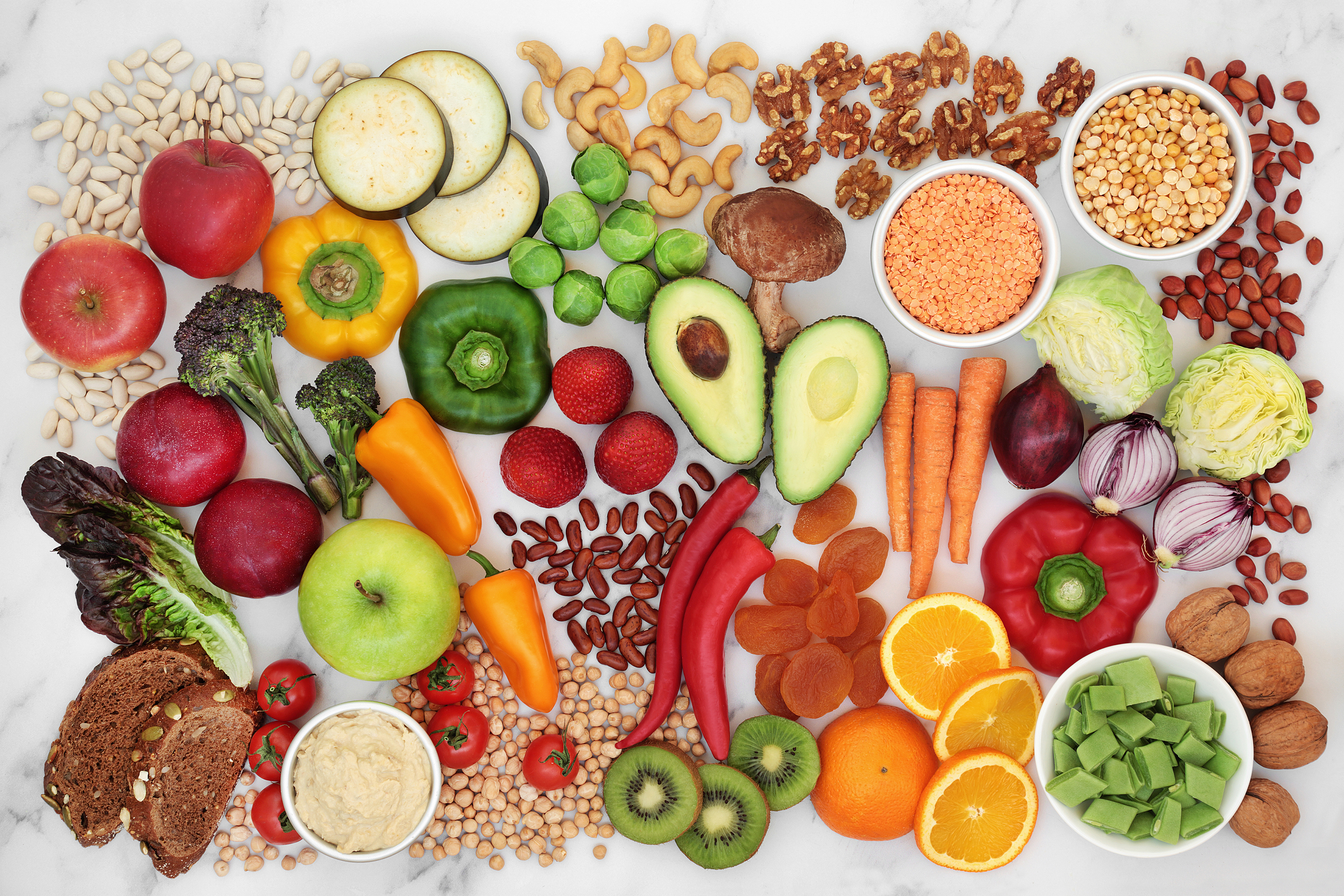
Some carbohydrates may raise blood glucose more than others. These include potatoes, sweets, and white bread. Better choices are less processed foods with more fiber and nutrients. Good choices are 100% whole-wheat bread, oatmeal, brown rice, and nonstarchy vegetables.
How Diabetes Occur
- It starts spilling back into your bloodstream. You get elevated blood sugar.
- Then, you get started on medication, maybe more insulin to push the sugar inside the cell. Which, at first, reduces the blood glucose.
- But with time, things get worse since you didn’t remove the excess sugar in the cell which is causing damage. Medication didn’t address the root cause but just covered up the symptoms. Sad.
Type 2 Diabetes Side Effects
Type 2 diabetes comes with many side effects and damage to organs eg
- -Eyes that leads to blindness
- -Kidney damage that results to dialysis
- -Heart issues
- – Feet issues that lead to leg amputations
Medication/Management
While the medication may reduce the blood sugar, they don’t prevent from the longterm negative effects and organ damage.
Prevention remains the best approach
- -“Don’t graze all day.. An adult, healthy doesn’t need more than 2 quality meals a day
- -Exercise, even something as simple as 30 minutes
- -Wheat and it’s products isn’t as good as it tastes. Does more damage than good
- – Sugar doesn’t provide any health benefit. You don’t need it.
- -Priorize quality sleep, manage stress
- -Hydrate and enjoy some sunshine
Nutrition Guidelines
Choose carbohydrates that come from vegetables, whole grains, fruits, beans (legumes), and dairy products. Avoid carbohydrates that contain excess added fats, sugar, or sodium. Choose “good” fats over “bad” ones. The type of fat may be more important than the quantity.
Follow a healthy eating plan for weight loss. Research shows that you can prevent or delay type 2 diabetes by losing weight by following a low-fat, reduced-calorie eating plan and by being more active. Following an eating plan can help you reach your weight-loss goal.
What Happens If A Type 2 Diabetic Doesn’T Eat?
- If you don’t eat, your blood sugar levels are lower and medication may drop them even more, which can lead to hypoglycemia.
- Hypoglycemia can cause you to feel shaky, pass out, or even go into a coma.
- When you “break” your fast by eating, you may also be more likely to develop too-high blood sugar levels
Is Type 2 Diabetes Reversible?- How Treat The Cause
Yes, by emptying the ‘sugar dish’ or making your cells insulin sensitive, utilizing the stored sugar first.
How?
- Go on a ketogenic diet healthy fats, vegetables and moderate amount of proteins. Animal proteins, all vegetables. 9The ketogenic diet involves consuming a very low amount of carbohydrates and replacing them with fat to help your body burn fat for energy. Health benefits can include weight loss and lowering your risk for certain diseases.)
- Start intermittent fasting and gradually increase your fasting hours.
- 2 meals a day is good
- Use good oils for cooking eg ghee, butter, animal fat or coconut oil. Extra virgin olive oil I’d good for vegetable salad dressing
- Enjoy your avocado
- No honey or the sweetened fruits. The fructose and fatty liver isn’t your friend in that journey
- Monitor your sugar levels
- Take your meds as needed and talk to your doctor about adjusting the dosage as you progress with your diet
- Exercise – combine walking or any other low impact exercise with resistance training. This will make your cells more insulin sensitive
- Ensure you sleep 8 hours a night
- Manage stress. Low impact exercises help much
- Drop the sugar full drinks – alcohol, sodas, juices, fruit smoothies, etc.
- No Carbohydrates including brown bread, Atta Chapati, brown rice etc.
Do that consistently for 3 months and as a lifestyle. See your weight drop and your health improve as you address the root cause.
The question isn’t whether it can be done, it’s whether you are ready to pay the price.
Foods to Avoid With Type 2 Diabetes
Refined (White) Flour and Sugar
Flour and sugar are the two ingredients most likely to wreak havoc for people with diabetes because they typically add unnecessary calories and end up leading to a boost in blood sugar—a double whammy. While you don’t have to avoid white flour (aka refined flour, all-purpose white flour) and sugar altogether, be aware that foods made with them—think sugar-sweetened cookies, cakes, doughnuts, and other baked goods—have little nutritional value and can crowd out healthier items that will leave you more satisfied.
Processed Foods
The more a food has been mechanically handled and refined, the greater the likelihood that its nutritional value will decrease. Plus such foods are often high in sugar, refined flour, or saturated fats. By eating foods that are highly refined, you are filling up on empty calories that will make it harder to manage your weight and your blood sugar levels.
Excess Salt
Some people are sensitive to salt, which causes higher blood pressure when too much sodium is consumed. Since there is no way of testing who is salt-sensitive and who isn’t, the best precaution is to limit salt and avoid sodium-containing foods if you may be at risk for high blood pressure.
The excess salt in most people’s diets comes from processed foods, so check the package for sodium content. Note that canned vegetables usually have added salt as a preservative. Your best bet when buying is to check the food labels for sodium content or look for low-sodium versions. You’ll want to stay well below the upper recommended limit of 2,300 mg/day.
Specific Red-Flag Items
A diabetes diet is more about avoiding certain types of foods than any single “bad” food. That said, in general you will want to steer clear of or minimize these specific items:
White breads and pastries
Pasta made from white flour
Processed foods made with added sugar or high-fructose corn syrup
Foods high in saturated fat (fatty meats, butter, sausage, bacon, cured meats, cheese, and ice cream)
Candy and soft drinks that contain sugar and high-fructose corn syrup
Top Diabetes-Friendly Foods
Although a type 2 diabetes diet can accommodate many foods, the American Diabetes Association recommends certain “superstars.” Think of these as the items that should form the cornerstones of your diabetes diet (provided you like eating them):
- Beans, including kidney, pinto, navy, and black
- Dark green, leafy vegetables like spinach and kale
- Citrus fruit
- Berries
- Tomatoes
- Fish high in omega-3s: salmon, albacore tuna, herring, sardines, mackerel, and trout
- Nuts and seeds
- Whole grains
- Milk and yogurt (watch the sugar content of yogurts)
Healthy Carb Choices For People With Diabetes Include:
- Whole-grain breads and cereals and foods made with 100% whole wheat, oats, quinoa, brown rice, corn, and cornmeal
- Dried beans, lentils, and peas
- Fresh (or frozen) fruits like berries, apples, pears, and oranges
- Vegetables. Both starchy and non-starchy vegetables are healthy carbs that have less (glycemic) effect on your blood sugar
- Dairy products including yogurt, milk, and cheese. The best yogurt is Greek-style or strained yogurt since these contain triple the level of protein. (Avoid yogurts labeled “fruit-sweetened,” which are mostly added sugar. Instead stir in some fresh or frozen berries, banana, or your favorite seasonal fruit to plain yogurt; you might even add some granola or chopped walnuts.)
Type 2 Diabetes Diet Sample Menus
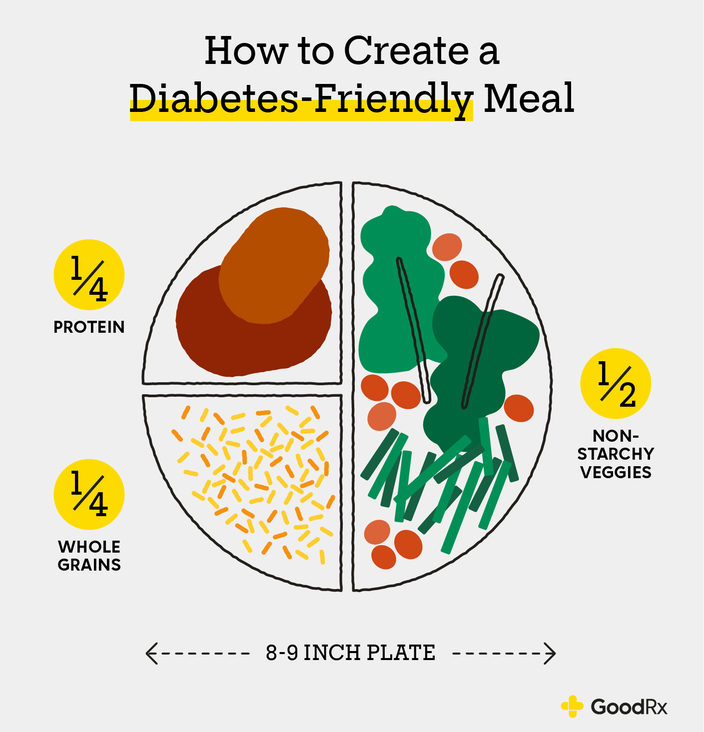
A useful tool to use when planning meals for diabetes is the Diabetes Plate Method: Divide the plate into quarters: ¼ protein or meat, ¼ carbs, and ½ (two quarters) vegetables and fruit. If you are trying to lose weight, use 9-inch dinner plates and bowls rather than larger dinner plates.
Here are some sample menus to give you an idea of the components that make up a healthy meal for someone with diabetes (or anyone, for that matter). We’ve included ideas for breakfast, lunch, snacks, and dinner.

Sample Breakfast Menu 1
1 slice of whole-wheat bread, toasted
1 small avocado, diced and spread on toast
1 to 2 slices of turkey bacon, pan seared, placed on toast
½ tomato, sliced and placed on toast
½ cup of nonfat Greek yogurt, in a bowl on the side
¼ cup of fresh blueberries, sprinkled on yogurt
Sample Breakfast Menu 2
1 cup cooked steel-cut oatmeal, ¼ cup fresh blueberries
2 or 3 eggs, scrambled (optional: egg whites only)
¼ green bell pepper, ¼ red bell pepper, sautéed in olive oil

Sample Lunch Menu 1
4 oz grilled or roasted chicken breast (skin removed)
8 oz collard greens. Remove woody stems, tightly roll leaves, then slice into ribbons.
1 medium yellow squash, cut into half moons
2 slices of turkey bacon, pan-seared in 1 tbsp of olive oil. Once cooled, dice turkey bacon.
Sauté in 1 tbsp olive oil—2 cloves of garlic (minced), squash, and collard greens. Once collard leaves wilt and squash has softened, add 1 cup of low sodium vegetable broth and bring to boil. Lower the heat, cover with a lid, and simmer until vegetables are done, roughly 10 minutes.
Add salt and pepper to taste, no more than ⅛ tsp of each. Add diced turkey bacon and mix. Plate with cooked chicken breast.
Sample Lunch Menu 2
4 oz. cod filet, broiled with lemon
1 cup brown rice, cooked
1 cup spinach, sauteed in olive oil with minced garlic and chopped onion
Once the spinach and onions are cooked, mix in the cooked brown rice and saute for 1 to 2 more minutes. Sprinkle with salt and pepper to taste, no more than ⅛ tsp of each.
Sample Snack Menu 1
4 oz. low sodium turkey breast, cut into 12 (1-inch) cubes
¼ English cucumber, cut into 12 half moons
12 cherry tomatoes
24 fresh mozzarella balls (about 2 ounces)
1 tbsp olive oil and 1 tbsp balsamic vinegar
12 small skewers or toothpicks
Take small skewers or toothpicks, and thread each skewer with 1 slice of cucumber, 1 turkey cube, 1 tomato, and 2 mozzarella pearls. Place threaded skewers on a plate and drizzle with olive oil and balsamic vinegar. Sprinkle with salt and pepper to taste, no more than ⅛ tsp of each.

Sample Snack Menu 2
2 medium sized pears, cut into 6 slices each
4 tbsp no-sugar-added creamy almond butter
3 tbsp dried cherries, raisins, or cranberries (your choice, pick one)
3 tbsp chopped walnuts
2 tbsp unsweetened coconut flakes
Place 12 slices of pear on a flat surface and spread 1 tsp of almond butter on each slice. Mix dried fruit, coconut flakes, and walnuts together in a small bowl. Sprinkle each pear slice with the dried fruit mixture, roughly 1 tbsp per slice.
Sample Dinner Menu 1
5 or 6 ounces roasted chicken (skin removed)
½ cup multigrain pasta (or Banza chickpea pasta), cooked, tossed with 2 tablespoons olive oil and a teaspoon of grated Parmesan cheese
2 cups sautéed zucchini and/or summer squash and sliced mushrooms
Sample Dinner Menu 2
6-ounce salmon fillet, broiled with lemon
½ cup lightly steamed broccoli and ½ cup halved cherry tomatoes
1 cup baby kale and spinach, lightly sautéed in olive oil with chopped garlic and onion

Sample Dinner Menu 3
6 ounces (about 1 ½ cups) sautéed tofu seasoned with Chinese Five Spice powder
⅓ cup quinoa
¼ avocado, sliced and topped with sesame seeds and a squeeze of lime
1 cup cucumber, snow pea pods, arugula, and radish salad dressed with vinegar and light soy sauce
Conclusion
PS. If you are overweight, you are insulin resistant and most probably pre-diabetic. Work on your diet and lifestyle.
PSS. If you’re addicted to carbohydrates, and grazing all day, you could also be pre-diabetic though slim or having ‘normal weight’ . Do something before it’s too late.
